
 Being that today is the feast day of Saint Valentine it seems apropos for me to continue my celebration of Women in Horror Month with a look at one of my guilty pleasures: gothic romance novels. I read a metric ton of them as a teenager and young adult, before they seemed, sadly, to fall out of fashion. What did I love about them?
The plots were all kind of similar. A young woman who is all alone in the  world is sent as a ward/governess/young bride to live in a creepy old house/castle to work for/marry/be a ward of a mysterious man with dark secrets. Once she gets there she is scared out of her wits by a series of supernatural/creepy, terrifying events, and must find the courage to solve the mystery, usually discovering that the mysterious man who controls her life is really a damaged and misunderstood man who will be saved by her love.
What I liked most about them was the atmosphere and that they featured plucky female protagonists. They would feature a slow build of increasingly  strange events, which seemed to point to supernatural causes. I loved the slower pacing of these stories. They didn’t start out scary, but would gradually inch towards fever pitch – that lovely feeling of the hairs on the back of your neck standing on end, biting your nails in anxiety, waiting for that moment when all would become clear and our heroine would save the day…and the hero.
I’ve recently read a few vintage gothic romances and they haven’t stood the test of time that well, 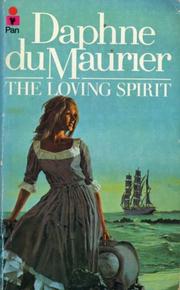 unfortunately. Some do. Daphne du Maurier’s stand up well, some of Victoria Holt’s, but others just made me snicker at my younger self. Nowadays I don’t find men who lock their mentally ill wives in attics romantic at all. Ditto for men who neglect their wards and wives or sexually harass their governesses. Older and wiser, I suppose.
What I still enjoy and remember, though, was the creepy atmosphere. The scenes of heroines in flimsy gowns bravely entering the abandoned wing, falling down the stairs to the dank dungeons, climbing the  steps to the attic full of memories and portraits, running from the house in terror. *shiver* No doubt you’ve seen these scenes in horror movies. Those moments of yelling at the screen: “don’t go into the basement!” have a long history.
Gothic romances were written mostly by women. One of my old faves, Victoria Holt, wrote more than twenty of them, and that was  only one of Eleanor Hibbert’s many pen names. Du Maurier’s works have fared better, perhaps because so many of her works have been adapted for stage and screen, perhaps because not all of her stories ended with a romantic resolution and were thus given more serious consideration. At the end of the day, though, maybe she was just a better writer.
Both Hibbert and du Maurier were much influenced by the Bronte sisters, who in turn were well acquainted with another literary tradition, that of the gothic novel, particularly those of 18th century author, Ann Radcliffe. Jane Austen’s ‘Northanger Abbey’ is an affectionate parody of Radcliffe’s The Mysteries of Udolpho. Austen charmingly makes her heroine a Radcliff fangirl. Thus, the gothic romance has a rather thoroughbred pedigree.
Why did the gothic romance fall out of fashion? Changing times, I guess. Though when I encounter one of the recent plethora of YA paranormal romances, I always think of my younger years, under the covers with an atmospheric tale of dangerous men, beautiful gowns and plucky heroines. Maybe I’m wrong?







 dianedooley.wordpress.com
Another huge gothic romance fan in my teen years–Victoria Holt, Phyllis Whitney, Mary Stewart, etc. I freakin’ checked out from our public library every one of those I could get my greedy little hands on! They hold a fond place in my memories, but after thumbing through one old Stewart favorite, you’re right, you can’t go back again.
I don’t know about you, Claire, but I’m ready for a more modern take on the gothic romance. I hope they come back into fashion.
Diane, I loved your post! I was searching for gothic book sites and came across it. I am actually a published author with three houses and I am actually writing a “modern gothic”. It’s called The Shadows of Stormclyffe Hall and releases Sept 22, 2014. I’ll be curious to see what happens. I’d love to see a revival in the gothics, only have them slightly updated. I grew up on Mary Stewart and Victoria Holt and would love to see other readers get back into reading them and the other gothic greats. 🙂
While I didn’t read the romance books, what you described was a perfect recipe for any Gothic mystery. From the sounds of it, some of Daphne’s stuff would be considered Gothic thriller but because she wrote romance, they got that label.
For that matter, you just described Bram Stoker’s Dracula.
There is a fine line and I love when it gets blurred.
Yep, horror, thrills and mysteries, with a bit of romance thrown in. Lots of lovely, blurry lines.
This is what I write. 🙂 but it’s more a mix of a gothic setting with a paranormal romance, because I have vampire heroes. 🙂
Cool, Bettie!
I think you’re right, many of today’s YA “horror” could be considered the new gothic romance. In fact, one of the ones you feature in your post, Dark Companion, I’ve read and really, REALLY enjoyed. It has that slow pace, tension building. It has a slowly revealed supernatural plot (so slow that I had to keep second guessing that there even was one for a while). It has the heroine who has to solve the mystery in order to get out of her situation. It kind of follows what you’ve described almost perfectly (though, it’s not as scary as the original gothic romances were).
I was originally thinking that ‘romantic suspense,’ an actual sub-genre in Romance was the descendant of the gothic romance, but those books tend to be mysteries without the atmosphere and delicious gloom of the gothics. Certainly, the YA covers are very reminiscent of the earlier gothic romances.
I am one of the authors of the Harlequin Shivers box set of ‘new gothic’ romances. As a gothic romance fan myself, I’m saddened that the genre fell out of fashion and I do consider it unique and distinct from paranormal romance. The current box set will be withdrawn from sale on 31st March and the four titles will then be sold separately. A new box set will be launched on 1st April. Hopefully a small contribution to the campaign to bring back the gothic! http://www.amazon.com/Shivers-Box-Set-Darkening-Darkness%5CDevils-ebook/dp/B00GKBHK6K/ref=sr_1_1?ie=UTF8&qid=1389135337&sr=8-1&keywords=Shivers+Box+Set
I love gothics! I used to inhale them and inherited around 300 of them from my mom when she passed. I would love to see them come back as well and intend to write one in the near future.
I loved the cover art in particular. Some of it was just gorgeous.